
luglugalugaaen |

sea nav gua

form

GET YOUR FREE QUOTE

We will contact you within 24 hours.

The Unsung Backbone of Industrial Success

Time: 8-July 2025 | Source: I-FLOW| Share

A Quiet Force with Powerful Purpose

They aren’t just about opening and closing pathways. Valves control pressure, direct flow, and safeguard systems under intense conditions. In environments dealing with high temperatures, corrosive chemicals, or volatile gases, valves act as both protectors and regulators—ensuring that every process runs smoothly, reliably, and safely.
Take a pressure relief valve as an example. In power generation facilities, this single component prevents dangerous build-up by automatically releasing excess pressure. A check valve, on the other hand, quietly stops fluid from flowing in the wrong direction—crucial in pumping stations and water supply networks.

Adapting to Every Industry, Every Condition

Different industries present different challenges—and valves rise to meet each one. In chemical processing, materials must withstand corrosion. In marine engineering, they must function under extreme pressure and resist saltwater degradation. In pharmaceutical manufacturing, cleanliness and precision are paramount.
This is where the diversity of valve types comes into play:
  • Gate valves are often used for isolation in water systems.
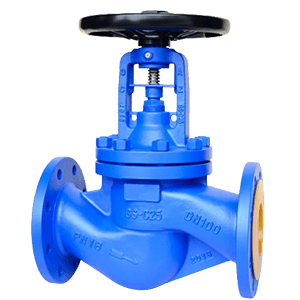
  • Globe valves provide finer control over flow, ideal for HVAC and dosing applications.
  • Ball valves deliver quick shutoff, especially useful in gas pipelines.
  • Butterfly valves offer lightweight, compact solutions for large diameter pipes.
  • Check valves ensure one-way flow, preventing damage from reverse currents.
  • Safety and relief valves act as final failsafes in pressurized systems.
  • Needle valves provide pinpoint control in small, high-precision systems.
  • Balancing valves maintain hydraulic equilibrium in heating or cooling loops.


Behind Every Reliable System Is a Reliable Valve

A smooth-running facility isn’t just about automation or advanced software. It’s about hardware—valves built to endure and perform under stress. Their contribution is twofold: they increase operational efficiency and reduce risks.
Think of a factory that deals with flammable gases. Without proper valves, the margin for error narrows dangerously. But with the right valves in place—selected for material compatibility, rated pressure, and thermal limits—operators can rest assured the system is both safe and efficient.
Moreover, valves designed with low pressure drops, minimal maintenance needs, and long service life are critical for industries seeking to lower costs and environmental impact.

Selecting the Right Valve: An Investment in Stability

Valves are not one-size-fits-all. Engineers must account for:
  • Media characteristics (viscous, clean, toxic, etc.)
  • Pressure and temperature conditions
  • Required level of flow control
  • Maintenance access and frequency
  • Industry-specific regulations and certifications
In short, choosing the right valve is an engineering decision that directly impacts performance, safety, and ROI. Stainless steel valves might be optimal in corrosive environments, while ductile iron may suffice for general waterworks. For critical operations, smart valves with feedback sensors and remote actuation might be the key to next-level control.

Looking Ahead: The Smart Valve Era

As industrial systems evolve, so do valves. With the rise of smart factories and IoT integration, intelligent valve systems are becoming more prevalent. These advanced units offer real-time data on temperature, flow rate, and pressure—allowing operators to make proactive decisions, avoid failures, and streamline maintenance.In this era, the importance of valves is not diminishing—it’s growing.
Back To The List btn

Related News

How To Use 3-Way Valve The Right Way in Different Applications
19-December 2025

How To Use 3-Way Valve The Right Way in Different Applications

If you’ve ever needed to mix two flows, switch directions, or create a bypass line, a 3-way valve is likely the solution. But using it correctly is not just about installing it—it’s about knowing how it should behave inside your system.Let’s keep it simple.

View Details
What Is The Purpose & Importance of Shut-Off Valve
18-December 2025

What Is The Purpose & Importance of Shut-Off Valve

View Details
Understanding The Different Types of Safety Valves
18-December 2025

Understanding The Different Types of Safety Valves

Safety valves are critical components in modern pressure protection systems, designed to prevent overpressure, equipment damage, and serious safety accidents. Across industries such as oil and gas, chemical processing, power generation, marine engineering, HVAC, and industrial manufacturing, safety valves serve as the final line of defense when system pressure exceeds safe limits.

View Details
How To Select The Right Size Knife Gate Valves
11-December 2025

How To Select The Right Size Knife Gate Valves

In many industrial systems, speed is not just an advantage—it is a necessity. When a pipeline needs to be shut off instantly to prevent backflow, equipment damage, or safety hazards, a quick closing valve becomes the frontline safeguard. These valves are engineered to close rapidly under emergency or controlled conditions, ensuring that fluid movement can be stopped at the critical moment.

View Details
Key Factors To Consider When Choosing Quick Closing Valve
10-December 2025

Key Factors To Consider When Choosing Quick Closing Valve

In many industrial systems, speed is not just an advantage—it is a necessity. When a pipeline needs to be shut off instantly to prevent backflow, equipment damage, or safety hazards, a quick closing valve becomes the frontline safeguard. These valves are engineered to close rapidly under emergency or controlled conditions, ensuring that fluid movement can be stopped at the critical moment.

View Details
What Is The Float Control Valve
10-December 2025

What Is The Float Control Valve

In many water supply systems, maintaining a stable liquid level is essential for safety, energy efficiency, and overall system performance. Among the various level-control devices available, the float control valve stands out for its reliability, simplicity, and ability to operate without external power. As industries move toward smarter and more efficient fluid management, understanding how this valve works—and the advantages it brings—has become increasingly important.

View Details