What Are Balancing Valves
In modern HVAC, water distribution, and industrial fluid systems, balancing valves are among the most important components for efficiency, reliability, and long-term cost savings. They regulate the flow of water or other media so that every part of the system receives the correct volume. Without balancing, some circuits would be overloaded while others would be starved, resulting in energy waste, poor comfort control, and even equipment damage.
Balancing valves come in two main types: manual balancing valves and automatic balancing valves. Although they serve the same purpose—to ensure proper distribution of flow—they work in very different ways and are used in different scenarios.
What Is a Manual Balancing Valve
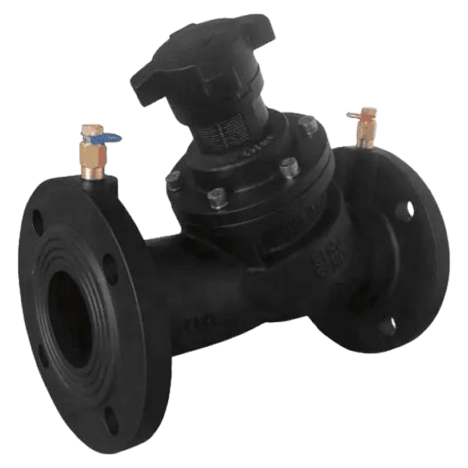
A manual balancing valve is essentially an adjustable flow restrictor. It is operated by hand and allows technicians to manually set the flow rate in each part of a system. The valve usually has a handwheel or lever that changes the internal opening, thereby increasing or decreasing the resistance to flow.
Key Features of Manual Balancing Valves
-
User-adjustable: Technicians set the flow rate based on system requirements.
-
Flow measurement ports: Many manual models include ports for differential pressure measurement, allowing more precise calibration.
-
Cost-effective: Simple design makes them relatively inexpensive compared to automatic valves.
-
Static control: Once set, the valve maintains the flow only under stable operating conditions.
Where They Are Used
Small to medium HVAC systems.
-
Constant flow applications where conditions rarely change.
-
Systems where technicians can perform seasonal adjustments.
What Is an Automatic Balancing Valve
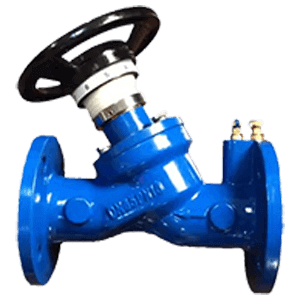
An automatic balancing valve regulates flow without manual intervention. Instead of relying on technicians to adjust settings, it uses an internal mechanism—such as a pressure regulator, spring, or diaphragm—to maintain a constant flow regardless of pressure fluctuations in the system.
Key Features of Automatic Balancing Valves
-
Self-regulating: Adjusts flow automatically in response to changes in system pressure.
-
Dynamic control: Ensures consistent distribution even when loads vary or other circuits are adjusted.
-
Higher precision: Delivers accurate flow rates without the need for constant recalibration.
-
Higher cost, higher efficiency: Typically more expensive, but energy savings often justify the investment.
Where They Are Used
Large HVAC systems with multiple branches.
-
Variable flow systems where demand changes throughout the day.
-
Complex commercial and industrial facilities requiring precise, stable flow.
Manual VS Automatic Balancing Valves
| Feature | Manual Balancing Valve | Automatic Balancing Valve |
| Operation | Adjusted by technician manually | Self-regulates automatically |
| Control Type | Static (works only under set conditions) | Dynamic (adapts to system changes) |
| Cost | Lower initial cost | Higher upfront cost |
| Maintenance | Requires seasonal or periodic adjustment | Minimal, mostly self-sufficient |
| Best Application | Small, stable systems | Large, variable, complex systems |
Why Balancing Valves Matter
In any hydronic or fluid distribution system, the consequences of imbalance are serious. Without proper balancing:
-
Some circuits may receive too much flow, wasting energy.
-
Other circuits may be under-supplied, reducing performance.
-
Pumps and equipment may operate inefficiently, leading to higher costs and shorter service life.
Balancing valves—whether manual or automatic—ensure fair distribution, optimize system performance, and contribute to sustainability goals by reducing unnecessary energy consumption.
Choosing Between Manual and Automatic
System size and complexity
-
Small residential or simple commercial systems can usually rely on manual valves.
-
Large multi-story buildings, hospitals, or industrial plants benefit more from automatic valves.
-
Budget considerations
-
Maintenance capacity
-
If your team can manage seasonal adjustments, manual valves may suffice.
-
If you want a “set it and forget it” solution, automatic valves are the better choice.
-
Flow stability needs



.png "luga")
 en |
en |