
luglugalugaaen |

sea nav gua

form

GET YOUR FREE QUOTE

We will contact you within 24 hours.

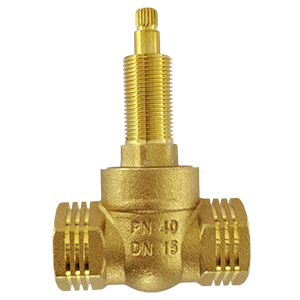
Why Choose Brass Ball Valves for Your Plumbing

Time: 25-December 2025 | Source: I-FLOW| Share

In modern plumbing systems, reliability, durability, and safety are non-negotiable. Among the various valve options available, brass ball valves have become a preferred choice for residential, commercial, and light industrial plumbing applications—and for good reason.

Brass is naturally resistant to corrosion, making brass ball valves especially suitable for potable water systems. Unlike some alternative materials, brass maintains its structural integrity even when exposed to moisture, pressure fluctuations, and temperature variations. This corrosion resistance directly contributes to a longer service life and reduced maintenance costs.

Another key advantage lies in tight shut-off performance. Brass ball valves use a rotating ball with a precision-machined bore, allowing for quick, quarter-turn operation and reliable sealing. This ensures minimal leakage, improved water efficiency, and greater control during system maintenance or emergency shut-offs.


From an installation perspective, brass ball valves are easy to handle, compatible with common pipe materials, and available in threaded, compression, or soldered connections. Their proven performance, combined with international acceptance in plumbing standards, makes them a trusted solution for both professionals and end users.

Choosing brass ball valves means investing in safety, efficiency, and long-term reliability—qualities that every plumbing system depends on.

Back To The List btn

Related News

What Is The Needle Valve and How Does It Work
14-January 2025

What Is The Needle Valve and How Does It Work

Inside a needle valve is a thin, pointed stem that moves slowly in and out of a small opening. This design allows you to adjust flow gradually and accurately, rather than making sudden changes.

View Details
What Are The Unique Features of Storm Valves
14-January 2025

What Are The Unique Features of Storm Valves

A storm valve is a specialized marine valve designed to prevent the backflow of seawater into shipboard drainage and discharge systems. Commonly installed on overboard discharge lines, storm valves play a critical role in maintaining vessel safety, especially in rough sea conditions.

View Details
Do You Really Know How To Choose Balancing Valves
31-December 2025

Do You Really Know How To Choose Balancing Valves

Balancing valves are often seen as simple accessories in HVAC and hydronic systems—but in reality, choosing the wrong balancing valve can undermine system efficiency, comfort, and energy performance. Do you really know what to look for when selecting one?

View Details
How Fire Protection Valve Enhance Safety Measures
25-December 2025

How Fire Protection Valve Enhance Safety Measures

Fire protection valves are critical components in fire safety systems, designed to control the flow of water or firefighting agents within sprinklers, hydrants, and standpipe networks. Their primary purpose is to ensure rapid and reliable response during fire emergencies, preventing loss of life, property damage, and business disruption.

View Details
Why You Should Have a PRV And How It Works
25-December 2025

Why You Should Have a PRV And How It Works

A Pressure Reducing Valve (PRV) is a critical component in water, gas, and steam systems, designed to automatically regulate downstream pressure to a safe, consistent level. Installing a PRV ensures system safety, efficiency, and equipment longevity.

View Details
How To Use 3-Way Valve The Right Way in Different Applications
19-December 2025

How To Use 3-Way Valve The Right Way in Different Applications

If you’ve ever needed to mix two flows, switch directions, or create a bypass line, a 3-way valve is likely the solution. But using it correctly is not just about installing it—it’s about knowing how it should behave inside your system.Let’s keep it simple.

View Details