Safety valves are critical components in modern pressure protection systems, designed to prevent overpressure, equipment damage, and serious safety accidents. Across industries such as oil and gas, chemical processing, power generation, marine engineering, HVAC, and industrial manufacturing, safety valves serve as the final line of defense when system pressure exceeds safe limits.
What Is a Safety Valve
A safety valve is an automatic pressure-relief device designed to open at a preset pressure and discharge excess pressure from a system. Once normal pressure is restored, the valve closes and reseats automatically.
Safety valves operate without external power and act as a last line of defense against:Equipment rupture.Pipeline failure.Explosion or fire risk.System instability
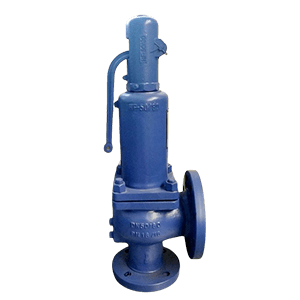
Main Types of Safety Valves
1. Spring-Loaded Safety Valve
Spring-loaded safety valves are the most common type used in industrial systems.
How it works:
A calibrated spring holds the valve disc in the closed position. When system pressure exceeds the set pressure, the force overcomes the spring, lifting the disc and releasing pressure.
Key features:Compact design.Fast response.Reliable and cost-effective.Easy to adjust and maintain
Typical applications:Boilers.Compressors.Pressure vessels.Steam and gas systems
2. Pilot-Operated Safety Valve
Pilot-operated safety valves use system pressure to control a larger main valve via a pilot valve.
How it works:
The pilot senses pressure and controls the opening of the main valve, allowing for precise operation even at high pressures.
Key features:High capacity relief.Minimal leakage at set pressure.Stable performance under high back pressure
Typical applications:High-pressure gas systems.Refineries.Petrochemical plants.Large pipeline networks
3. Safety Relief Valve
A safety relief valve combines the characteristics of both safety valves (for gases) and relief valves (for liquids).
How it works:
It opens proportionally as pressure rises and can handle both compressible and incompressible fluids.
Key features:Versatile operation.Suitable for mixed-phase systems.Smooth pressure release
Typical applications:HVAC systems.Chemical processing.Liquid and vapor systems
4. Balanced Bellows Safety Valve
This type uses a bellows to isolate the spring and disc from downstream pressure effects.
How it works:
The bellows compensates for back pressure, ensuring accurate set pressure and stable valve operation.
Key features:Resistant to back pressure fluctuations.Protects spring from corrosive media.Improved pressure accuracy
Typical applications:Chemical plants.Systems with variable back pressure.Corrosive environments
5. Low-Lift Safety Valve
Low-lift safety valves open only slightly when activated.
How it works:
The valve disc lifts a short distance, providing controlled pressure release.
Key features:Suitable for gradual pressure relief.Compact structure
Typical applications:Liquid systems.Low-pressure applications
6. Full-Lift Safety Valve
Full-lift safety valves open rapidly to their maximum position once the set pressure is reached.
How it works:
A huddling chamber allows rapid disc lift for full flow discharge.
Key features:Maximum discharge capacity.Rapid response to overpressure
Typical applications:Steam boilers.Gas systems.High-risk pressure vessels
Key Differences Between Safety Valves and Relief Valves
While often used interchangeably, there is a technical distinction:
Safety relief valves bridge the gap between the two.
How to Choose the Right Safety Valve
When selecting a safety valve, consider:
-
Set pressure and relieving capacity
-
Type of medium (gas, steam, liquid)
-
Operating temperature
-
Back pressure conditions
-
Applicable standards (ASME, API, ISO, CE)
-
Installation environment
Proper sizing and certification are essential for compliance and safety.



.png "luga")
 en |
en |