
luglugalugaaen |

sea nav gua

form

GET YOUR FREE QUOTE

We will contact you within 24 hours.

What Are Rubber Expansion Joints

Time: 28-October 2025 | Source: I-FLOW| Share

Understanding Rubber Expansion Joints

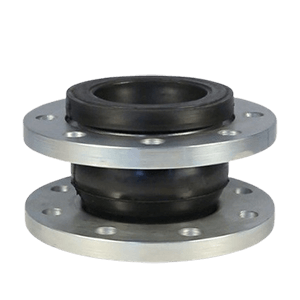
A rubber expansion joint is a flexible connector made from natural or synthetic elastomers, often reinforced with fabric, steel, or nylon. It’s installed between two pipe sections to compensate for thermal expansion, vibration, and mechanical stress.

These joints act like shock absorbers for piping systems. When pipelines expand, contract, or vibrate due to operational conditions, the rubber joint flexes and prevents damage to nearby components such as pumps, valves, and fittings.

Why They Are Essential

1. Absorbing Thermal Expansion

When fluids at high temperatures pass through pipelines, metal pipes expand. A rigid connection would transfer that stress to joints or supports, causing leaks or cracks. A rubber expansion joint flexes naturally, preventing system strain.

2. Reducing Vibration and Noise

Industrial equipment such as pumps and compressors generate vibration. The flexible structure of rubber expansion joints isolates vibration, minimizing mechanical noise and extending the life of connected equipment.

3. Compensating for Misalignment

During installation or operation, small misalignments often occur. Rubber expansion joints provide flexibility that compensates for axial, lateral, and angular movement, ensuring a tight seal without additional stress.

4. Protecting System Components

By minimizing shock loads and water hammer effects, these joints prevent premature wear of sensitive components such as valves, flow meters, and pumps.


Applications Across Industries

Rubber expansion joints are used in HVAC systems, water and wastewater treatment, shipbuilding, oil and gas, and power generation. Their versatility, corrosion resistance, and durability make them suitable for both low- and high-pressure systems.

Back To The List btn

Related News

Best Practices for Installing Balancing Valves
5-December 2025

Best Practices for Installing Balancing Valves

Walk into any mechanical room, and you’ll quickly understand why balancing valves matter. They quietly determine whether an HVAC system runs smoothly or wastes energy with every cycle. While engineers design the system, it’s the installation that ultimately decides whether a balancing valve performs as intended. To help installers, contractors, and facility managers achieve consistent results, here’s a practical look at the best practices that truly make a difference on-site.

View Details
How Long Does Globe Valve Take To Open and Close
21-November 2025

How Long Does Globe Valve Take To Open and Close

When engineers choose a globe valve, they often focus on accuracy, pressure control, and durability. But once the valve is installed, another question always comes up during commissioning: “How long does this valve actually take to open and close?” It sounds simple, yet the answer influences everything—from system safety to actuator selection. In this guide, we break it down clearly and practically, based on engineering experience, manufacturer data, and real usage in industrial plants.

View Details
The Three Ship-Stopping Threats the Mud Box Fights
20-November 2025

The Three Ship-Stopping Threats the Mud Box Fights

Imagine you're on a long voyage, hundreds of miles from port. Everything is humming along until, suddenly, an alarm blares. "High Jacket Water Temperature!" What caused the multi-million dollar engine to start sweating? Often, the culprit is not a complex electronic failure but a simple blockage caused by mud, weeds, or even a rogue plastic bag.

View Details
The Complete Guide To Gate Valve Types
19-November 2025

The Complete Guide To Gate Valve Types

Gate valves are the workhorses of the industrial piping world. Primarily used for on/off control (isolation), they function by lifting a barrier (gate) out of the path of the fluid. Because they are either fully open or fully closed, they offer very low flow resistance but are generally poor at regulating flow.

View Details
How The Electric Butterfly Valves Work
14-November 2025

How The Electric Butterfly Valves Work

Electric butterfly valves are widely used in modern fluid control systems for their efficiency, automation capability, and precise operation. They combine the structure of a butterfly valve with an electric actuator, allowing operators to open, close, or regulate flow remotely with high accuracy.

View Details
Butterfly Valve Design Differences
14-November 2025

Butterfly Valve Design Differences

Butterfly valves are among the most widely used flow control devices in industrial piping systems. Their compact structure, quick operation, and cost efficiency make them ideal for a variety of applications, including water treatment, HVAC, marine, and chemical processing. However, not all butterfly valves are the same. The key lies in their design — each type offers distinct advantages based on pressure, sealing, and performance requirements.

View Details