
luglugalugaaen |

sea nav gua

form

GET YOUR FREE QUOTE

We will contact you within 24 hours.

What is The Difference Between Plug Valves and Gate Valves

Time: 8-September 2025 | Source: I-FLOW| Share

What is a Plug Valve

A plug valve is a quarter-turn rotary motion valve that uses a cylindrical or conical plug with a hollow passageway. By rotating the plug 90 degrees, the passage aligns with the pipeline to allow flow, or turns perpendicular to block it.

  • Design: Simple construction with a plug inside the valve body.

  • Operation: Fast quarter-turn (90° rotation).

  • Advantages:Quick shutoff or opening.Compact size with fewer parts.Good for frequent operation.Can handle slurries and viscous fluids.

  • Disadvantages:Higher operating torque compared to ball valves.May require lubrication to avoid wear.

  • Applications:Chemical processing.Oil and gas pipelines.Slurry handling.Compressed air and fuel lines

Plug valves are best where fast action and frequent operation are required.


What is a Gate Valve

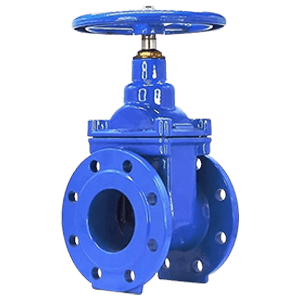
A gate valve is a linear motion valve that uses a flat or wedge-shaped gate to stop or allow flow. Unlike plug valves, they require multiple turns of a handwheel or actuator to move the gate up or down.

  • Design: Larger body with a vertical sliding gate.

  • Operation: Multi-turn (slow open and close).

  • Advantages:Excellent for full bore, unobstructed flow.Minimal pressure drop.Good sealing in on/off service.Suitable for high-pressure and high-temperature systems.

  • Disadvantages:Not suitable for throttling.Slower to operate compared to plug valves.Larger and heavier construction.

  • Applications:Water supply networks.Power plants.Oil & gas pipelines.Industrial process plants

Gate valves are ideal where tight shutoff and infrequent operation are required.


Key Differences

Feature Plug ValveGate Valve 
OperationQuarter-turn (90°)Multi-turn (slow)
SpeedFast open/closeSlow open/close
Flow ControlOn/Off, some throttling possibleOn/Off only (not for throttling)
DesignCompact, rotary plugLarger, sliding gate
MaintenanceNeeds lubrication sometimesSimple, but bulky
ApplicationsOil, gas, chemicals, slurriesWater, steam, pipelines, power

Which Should You Choose

  • Choose a plug valve if:

    • You need frequent operation.

    • Fast shutoff is critical.

    • The system handles viscous or slurry fluids.

  • Choose a gate valve if:

    • You need a low-pressure-drop, full-bore valve.

    • The valve will stay mostly open or closed for long periods.

    • Your system runs at high pressure or temperature.

Back To The List btn

Related News

How To Use 3-Way Valve The Right Way in Different Applications
19-December 2025

How To Use 3-Way Valve The Right Way in Different Applications

If you’ve ever needed to mix two flows, switch directions, or create a bypass line, a 3-way valve is likely the solution. But using it correctly is not just about installing it—it’s about knowing how it should behave inside your system.Let’s keep it simple.

View Details
What Is The Purpose & Importance of Shut-Off Valve
18-December 2025

What Is The Purpose & Importance of Shut-Off Valve

View Details
Understanding The Different Types of Safety Valves
18-December 2025

Understanding The Different Types of Safety Valves

Safety valves are critical components in modern pressure protection systems, designed to prevent overpressure, equipment damage, and serious safety accidents. Across industries such as oil and gas, chemical processing, power generation, marine engineering, HVAC, and industrial manufacturing, safety valves serve as the final line of defense when system pressure exceeds safe limits.

View Details
How To Select The Right Size Knife Gate Valves
11-December 2025

How To Select The Right Size Knife Gate Valves

In many industrial systems, speed is not just an advantage—it is a necessity. When a pipeline needs to be shut off instantly to prevent backflow, equipment damage, or safety hazards, a quick closing valve becomes the frontline safeguard. These valves are engineered to close rapidly under emergency or controlled conditions, ensuring that fluid movement can be stopped at the critical moment.

View Details
Key Factors To Consider When Choosing Quick Closing Valve
10-December 2025

Key Factors To Consider When Choosing Quick Closing Valve

In many industrial systems, speed is not just an advantage—it is a necessity. When a pipeline needs to be shut off instantly to prevent backflow, equipment damage, or safety hazards, a quick closing valve becomes the frontline safeguard. These valves are engineered to close rapidly under emergency or controlled conditions, ensuring that fluid movement can be stopped at the critical moment.

View Details
What Is The Float Control Valve
10-December 2025

What Is The Float Control Valve

In many water supply systems, maintaining a stable liquid level is essential for safety, energy efficiency, and overall system performance. Among the various level-control devices available, the float control valve stands out for its reliability, simplicity, and ability to operate without external power. As industries move toward smarter and more efficient fluid management, understanding how this valve works—and the advantages it brings—has become increasingly important.

View Details