
luglugalugaaen |

sea nav gua

form

GET YOUR FREE QUOTE

We will contact you within 24 hours.

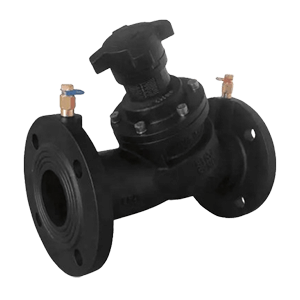
Where Should A Balancing Valve Be Installed

Time: 8-August 2025 | Source: I-FLOW| Share

Balancing valves play a critical role in maintaining system efficiency and comfort in HVAC, chilled water, and domestic hot water systems. But to achieve their purpose—ensuring flow balance and system stability—correct installation location is crucial.So, where should a balancing valve be installed?

1. Installed on the Return Pipe (Typical Practice)

In most hydronic systems, balancing valves are installed on the return side of terminal units (e.g., fan coil units, air handling units, radiators).
Why?
  • Return-side placement provides stable and lower temperature readings, making it easier to accurately measure flow rates.
  • Less thermal fluctuation improves the performance of manual and automatic balancing valves.
  • Prevents false readings caused by supply-side pump pressure surges.

2. Exceptions: Supply Side Installation

In some domestic hot water circulation systems, a balancing valve may be placed on the supply side—especially when the temperature control of the hot water loop is critical.
Always follow the manufacturer’s recommendation and project design documents.

3. Key Placement Considerations

  • Before control valves or isolation valves: Ensures balancing accuracy without interference.
  • Away from turbulent flow zones like elbows or T-junctions: At least 5x the pipe diameter upstream, 2x downstream clearance is ideal.
  • Accessible location: So maintenance and flow measurement can be easily carried out.

Conclusion

For effective flow control and system balancing, return-side installation is the standard best practice, especially in chilled and hot water systems.
Correct installation guarantees efficient commissioning, energy savings, and long-term reliability.
Need help selecting or installing the right balancing valve for your project?
Qingdao I-Flow offers manual, automatic, and pressure-independent balancing valves for all system types.
Back To The List btn

Related News

How To Use 3-Way Valve The Right Way in Different Applications
19-December 2025

How To Use 3-Way Valve The Right Way in Different Applications

If you’ve ever needed to mix two flows, switch directions, or create a bypass line, a 3-way valve is likely the solution. But using it correctly is not just about installing it—it’s about knowing how it should behave inside your system.Let’s keep it simple.

View Details
What Is The Purpose & Importance of Shut-Off Valve
18-December 2025

What Is The Purpose & Importance of Shut-Off Valve

View Details
Understanding The Different Types of Safety Valves
18-December 2025

Understanding The Different Types of Safety Valves

Safety valves are critical components in modern pressure protection systems, designed to prevent overpressure, equipment damage, and serious safety accidents. Across industries such as oil and gas, chemical processing, power generation, marine engineering, HVAC, and industrial manufacturing, safety valves serve as the final line of defense when system pressure exceeds safe limits.

View Details
How To Select The Right Size Knife Gate Valves
11-December 2025

How To Select The Right Size Knife Gate Valves

In many industrial systems, speed is not just an advantage—it is a necessity. When a pipeline needs to be shut off instantly to prevent backflow, equipment damage, or safety hazards, a quick closing valve becomes the frontline safeguard. These valves are engineered to close rapidly under emergency or controlled conditions, ensuring that fluid movement can be stopped at the critical moment.

View Details
Key Factors To Consider When Choosing Quick Closing Valve
10-December 2025

Key Factors To Consider When Choosing Quick Closing Valve

In many industrial systems, speed is not just an advantage—it is a necessity. When a pipeline needs to be shut off instantly to prevent backflow, equipment damage, or safety hazards, a quick closing valve becomes the frontline safeguard. These valves are engineered to close rapidly under emergency or controlled conditions, ensuring that fluid movement can be stopped at the critical moment.

View Details
What Is The Float Control Valve
10-December 2025

What Is The Float Control Valve

In many water supply systems, maintaining a stable liquid level is essential for safety, energy efficiency, and overall system performance. Among the various level-control devices available, the float control valve stands out for its reliability, simplicity, and ability to operate without external power. As industries move toward smarter and more efficient fluid management, understanding how this valve works—and the advantages it brings—has become increasingly important.

View Details